 Lowest price guarantee
 Free shipping over $50



Why do cats purr?
Purring is our cats’ most common sound, but most pet parents do not know the full range of meanings Kitty conveys with these soothing vibrations. Though our pets purr when they are content, cats also make this sound to signal other emotions and needs, such as hunger or healing. Here are a few tips for figuring out what your cat is trying to tell you when he purrs:
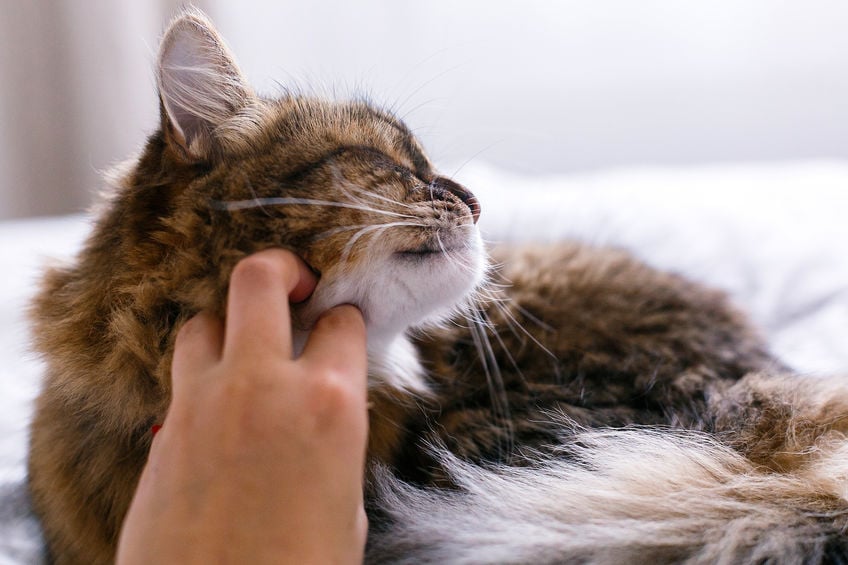
1. He is happy. Cats often purr when they are happy, but purring is just one sign of a content companion. Watch for other body language indicating your pet is at ease, such as a still tail, eyes half shut, and a relaxed body in resting position. If purring accompanies these signals, you can be sure Kitty is purring in pure bliss.
Whatever the cause behind Kitty’s soothing sounds, experts believe purring begins in cats’ brains. A rhythmic, repetitive brainwave send messages to the vocal cord muscles, causing them to twitch at a rate of 25 to 150 vibrations per second. The result is a separation of the vocal cords during both inhalation and exhalation—what we know as purring. Not all species of cats can purr, however, as larger types such as lions and tigers have a flexible, small bone within their vocal cords that allow them to roar, but not purr. In smaller felines, this bone is hardened, allowing purr-producing vibrations to occur when Kitty inhales and exhales, but preventing any far-reaching roars. This make sense for our housecats’ feral counterparts, who do not need to protect large swaths of land for hunting like big cats, and can thus reserve purring for an intimate few. In your household, you are one of Kitty’s chosen companions, so enjoy when he chooses to snuggle up to you with these soothing sounds.
Comments
No comments yet. Be the first to share your thoughts.
Leave a comment